Fill Quiet Midday Courts Without Discounting Friday Night
Empty mornings and midweek afternoons rarely fix themselves. Lower soft-hour rates, add mixers and clinics, and keep your busiest evenings at full price.
· · 4 min read
Evenings and weekends usually sell themselves. The leak is the stretch between morning drop-off and the after-work rush: courts that sit dark while you still pay for lights, staff, and rent.
You do not need to cut Friday at 7pm to fix that. You need pricing and programming aimed at the empty hours. Clubs that keep peak rates firm and treat soft hours as their own product usually fill more of the week without giving away their best inventory.
Lower the price where demand is soft
A flat all-day rate tries to do two jobs and fails both. It leaves mornings too expensive for students, retirees, and flex-schedule players, and it makes peak evenings feel cheaper than they should.
Set a softer rate for the quiet band (often weekday mornings and early afternoons) and leave evenings alone. You are moving demand toward empty courts, not training players to wait for a prime-time sale.
If you want the mechanics of peak versus off-peak rules, see peak evenings and quiet mornings. Price alone will not finish the job, but it is usually the first lever that makes soft hours bookable.
Give people a reason to show up when they have no group
Many players want court time and do not have three friends free at 11am. A weekly morning mixer with a host (or a coach organizing matches) fills courts that walk-up bookings never touch.
Keep it simple: same day each week, clear level bands if you have them, and a short description parents and freelancers can understand. Recurring social play builds habit. A one-off “open court” post rarely does.
Put coaching into the soft band, not on top of peak
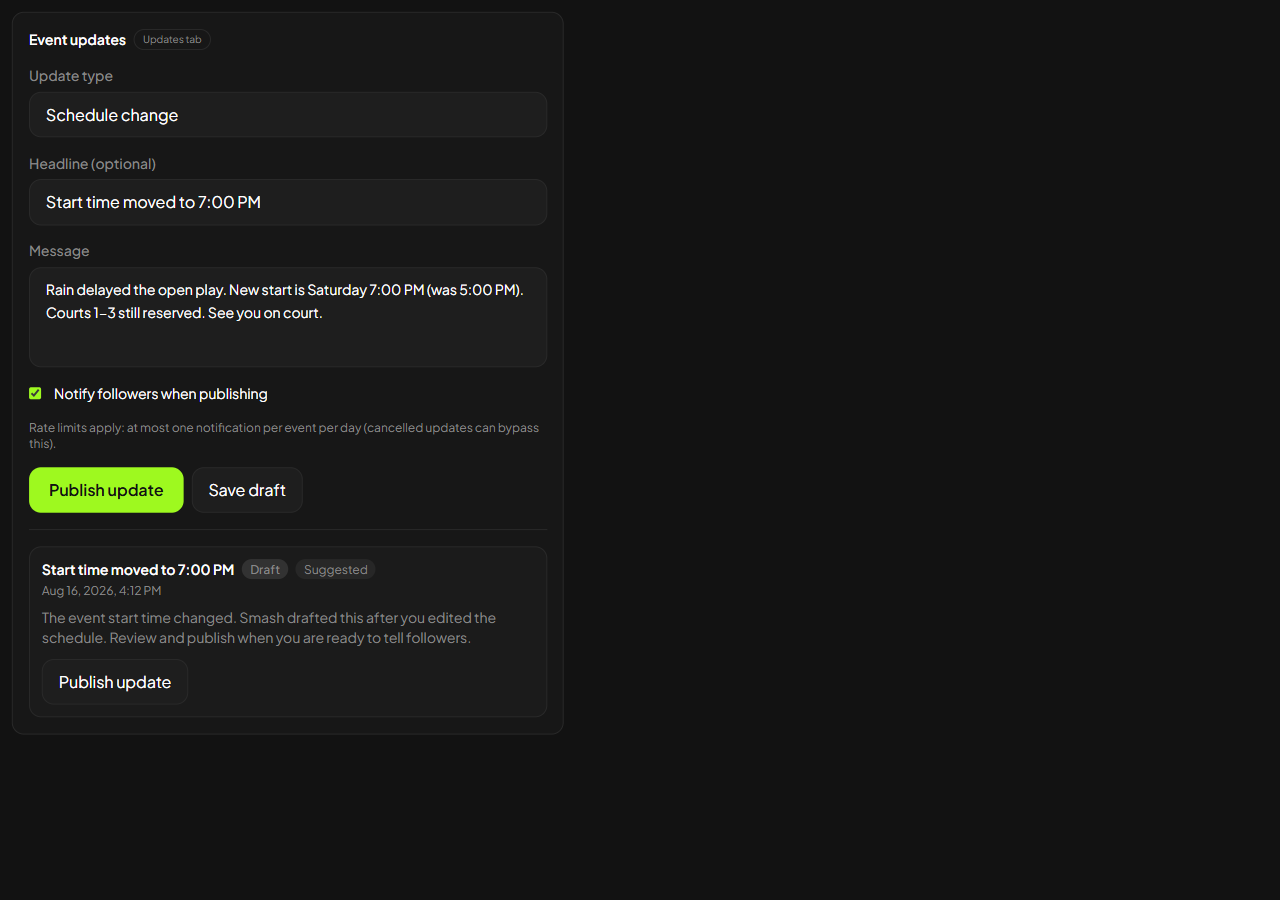
Half-day clinics and weekday training fit people who cannot play at 7pm: freelancers, parents after school drop-off, students between classes. Schedule those sessions into the quiet hours so coaching grows utilization instead of competing with your busiest bookings.
Holiday camps and adult clinics work the same way when you hold the courts for the session and publish capacity early. For formats that tend to sell, see clinics and camps that fill empty courts.
Sell daytime blocks to nearby employers
Local offices often look for lunch or early-afternoon activity. A standing corporate block on two courts every Wednesday, or a short wellness package for a nearby company, fills hours your members rarely want without touching Friday night.
Start with one company and a clear rate. Expand only after the desks and coaches can run it without chaos.
Build leagues for people with daytime free time
Retirees and students have flexible schedules. A daytime league or clinic series keeps courts active when evenings are already full, and it creates recurring revenue outside prime time.
Protect those courts on the shared calendar before you promote. A league that lives only in WhatsApp will collide with walk-up bookings. See one court calendar for classes, leagues, and bookings if that is still a weekly fight at the desk.
Pick the quiet window before you invent a promo
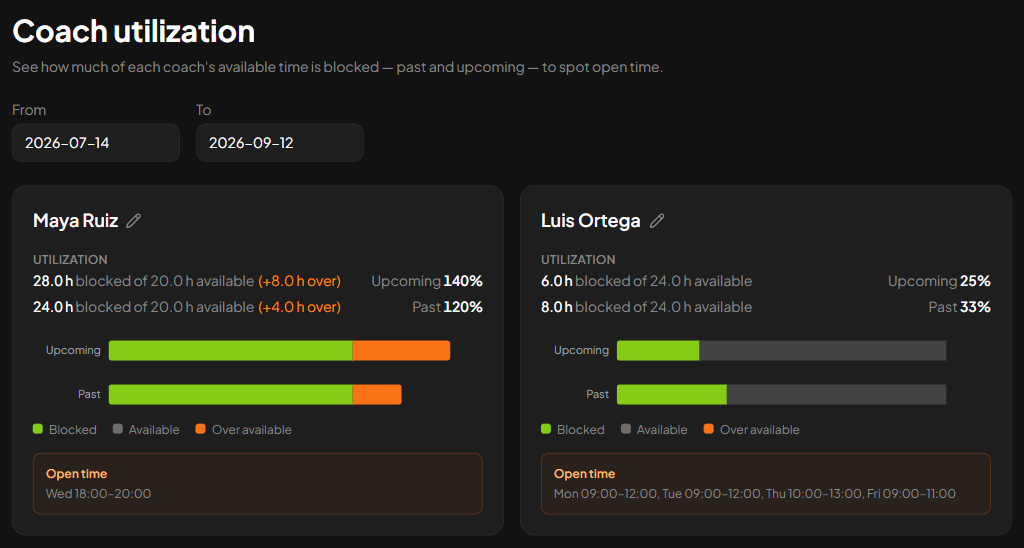
Gut feel says “mornings are slow.” It rarely tells you which mornings, which sport, or which multi-hour window is worth a clinic. Look at recent occupancy by day and time, then aim one promo or event at a concrete gap.
In Smash, that picture lives on Overview as utilization across the week, with soft spots for the underused windows. You can still do the same work with a printed grid and a highlighter. The point is to stop discounting hours that are already full. When you want a same-week loop from gap to idea, see quiet court hours hiding in plain sight.
What usually works (and what does not)
Discounting Friday first is the common mistake. Players who already want that slot will take the cut; empty Tuesday mornings stay empty.
Programming without a held court is the other. A clinic that is not blocked on the schedule gets booked over by a regular, and you spend the afternoon apologizing at the desk.
Do one soft-hour change this week: a morning rate, a mixer, or a half-day clinic. Re-check occupancy next week. Empty court hours expire every day; the clubs that fill them treat soft hours as inventory they manage on purpose, not leftover time they hope someone notices.
Keep exploring
Related articles