The Ten-Minute Check Before the First Players Arrive
A practical opening routine for checking today's bookings, courts, staff, and player messages before the first group walks in.
· · 5 min read
The opening check isn't the time to finish the club's entire to-do list. Its job is to catch small problems before players arrive.
A court assigned twice can still be fixed at 7:45. At 8:02, with two groups standing at reception, it becomes an argument. The same is true of a coach who thought someone else was opening the gate, a net left loose after last night's league, or a cancellation that never reached the front desk.
That is why a useful morning routine follows the day in the order it will happen. Start with the first booking, not with whichever number looks most important on a report.
Read the day from the first booking onward
Open today's schedule and read the first few hours line by line. Look for lessons, leagues, maintenance blocks, private bookings, and open play that share the same part of the day. Pay particular attention to anything that changed after the previous shift left.
You are not trying to study the whole week. You are answering practical questions:
- Which group arrives first, and which court are they using?
- Does a coach or event organizer need access before the normal opening time?
- Was anything moved, cancelled, or added late?
- Does a booking note change what the front desk needs to prepare?
A printed tournament sheet, a separate coaching calendar, and the booking system can all tell slightly different stories. If your club still uses more than one of them, settle the conflict before the doors open and make sure the person at reception knows which version is current.
Walk the courts even when the calendar looks fine
Software can tell you that Court 3 is booked at 8:00. It cannot tell you that the gate is still locked, the net has sagged overnight, or yesterday's rain has left part of the surface unsafe.
Walk the route a player will take. Check the entrance, reception, changing areas, and courts. Turn on the lights that should be on. Look at nets, glass, fences, loose equipment, standing water, and anything left behind after the final booking. If there is a problem, decide immediately whether the court can open, needs a quick fix, or must be taken out of use.
This doesn't need to become a long inspection. At a familiar venue, a consistent route is usually faster than relying on memory because you stop making decisions about what to check. You simply walk the same path every morning.
Bad weather, maintenance work, and a tournament the night before deserve extra time. On those mornings, arrive early enough that finding a problem doesn't automatically make the first booking late.
Confirm who is doing what
Many opening mistakes are really handover mistakes. One person assumes the coach has the keys. The coach assumes reception will put out the balls. The closing shift knows the card reader was unreliable, but the opening shift does not.
Before the first group arrives, confirm who is covering reception, who is opening any coached session, and who can make a decision if a court is unavailable. If someone is late or absent, change the plan while there is still time to do it calmly.
A short handover note is more useful than a long group-chat thread. It should say what changed, what still needs attention, and who owns it. “Court 2 closed until 10:00, move the 8:30 lesson to Court 4” is useful. “Maintenance issue, please check” only creates another round of questions.
Deal with the messages that affect this morning
Morning messages can consume all the time you meant to spend preparing the club. Do not work through the inbox from top to bottom. Start with anything that changes today's first few hours.
A player who cancelled overnight may free a court that someone else wants. A coach asking to move a lesson needs an answer before the student leaves home. A question about next month's membership can wait until the opening rush has passed.
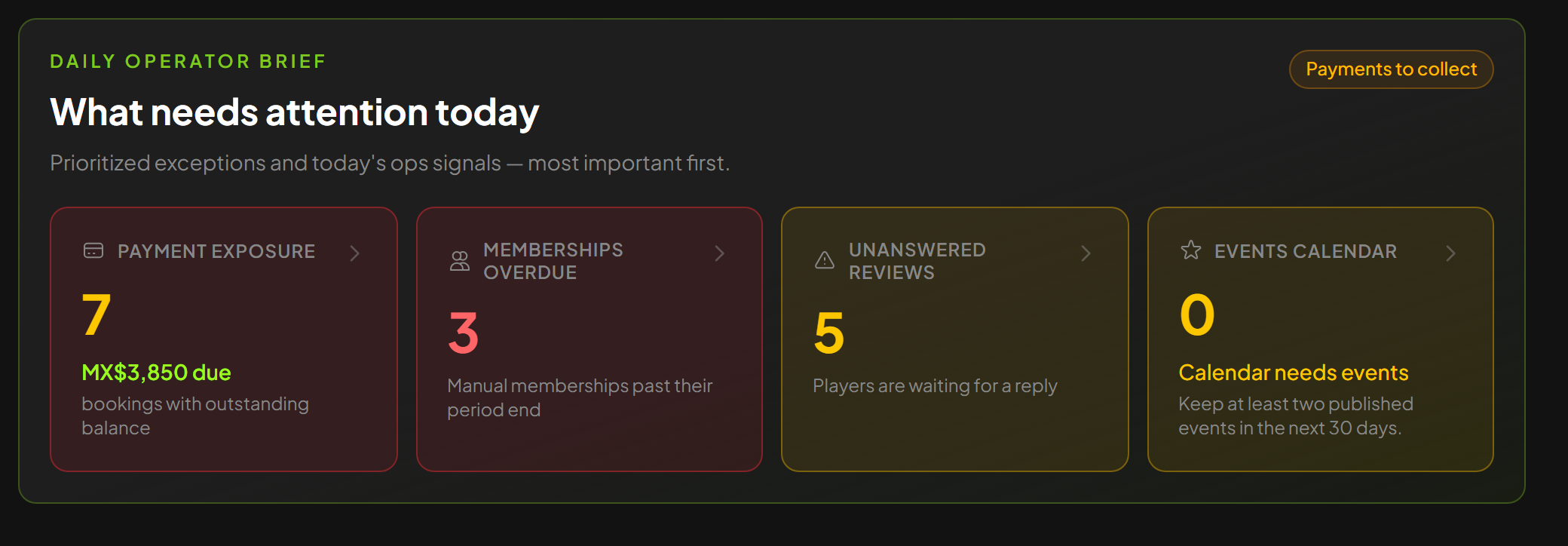
The same judgment applies to payments. Check a payment issue now when it affects today's booking or what the player will be asked at reception. A general list of overdue accounts is important, but it is not an opening task unless one of those people is about to arrive.
Once the immediate questions are settled, stop. Reviews, next month's events, and wider membership follow-up still matter, but mixing them into the opening check makes the routine too large to finish. Give those jobs their own time.
Keep the routine small enough to repeat
The best opening routine is not the most detailed one. It is the one the team actually completes every day.
If you use Smash to manage the club, today's bookings can give you a starting point. They do not replace the court walk or the conversation with the person opening beside you. Whatever system you use, keep one current schedule and one clear place for handover notes so staff do not have to reconstruct the morning from several chats.
Weekly questions belong elsewhere. Set aside time to look at occupancy, revenue, returning players, and the hours that remain difficult to fill. The weekly club metrics guide covers that review without turning it into part of every morning.
If the schedule makes sense, the courts are ready, and the right people are present, open the doors. The rest can wait until the first rush has passed.
Keep exploring
Related articles