Answer Routine Club Questions Once
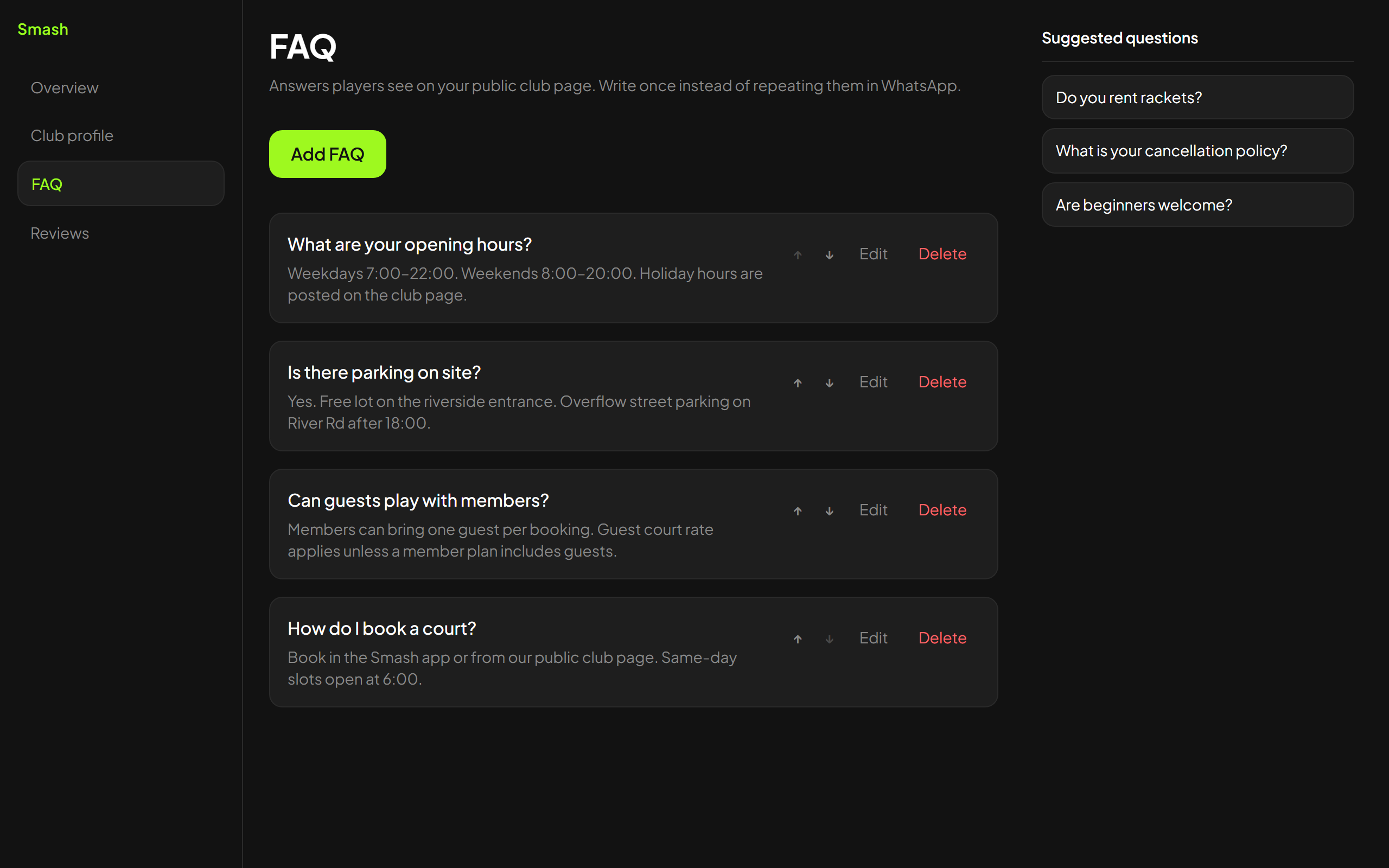
Turn repeated questions about hours, parking, guests, and booking into a short public FAQ with one owner and one current source.
· · 2 min read
When staff answer the same question every evening, the problem is usually not the volume of messages. It is that the answer is difficult to find or changes depending on who replies.
Keep WhatsApp for unusual situations and conversation. Put stable facts somewhere public and easy to update.
Start with the questions already arriving
For two weeks, note repeated questions instead of guessing what belongs in a FAQ. Hours, parking, guest access, equipment rental, beginner sessions, and booking instructions often appear, but each club's list will differ.
Combine duplicates and put the most common decisions first. A visitor should not have to read twenty answers to learn whether they can park.
Write the answer staff would say aloud
Use direct language and include the condition that changes the answer. "Guests are welcome" is incomplete if they must play with a member or pay a fee.
Avoid copying policy text into every answer. Link to the full cancellation or membership terms when detail matters, then summarize the practical point.
Make one page authoritative
Publish the FAQ with the club's other current information. Give staff a short link to share, and update the page before sending revised wording into group chats.
An answer needs an owner. If opening hours change for a holiday, decide who updates the public page and when the normal hours return.
Use messages as an editing signal
If a supposedly answered question keeps arriving, check whether the page is easy to find and whether the wording actually resolves it. Do not blame players for missing information that appears below an old poster or behind an unclear label.
Smash lets claimed clubs publish FAQs on their public club pages. A club website, booking page, or maintained profile can serve the same purpose. The important rule is that staff and players share one current source.
The goal is not to prevent people from asking for help. It is to answer routine facts before they need a person, leaving staff time for questions that genuinely require judgment.
Keep exploring
Related articles