Collect Unpaid Court Bookings Before the Rush
Set clear payment deadlines, release unpaid courts while they can still be booked, and give one staff member ownership of the current balance list.
· · 2 min read
An unpaid booking is both money owed and court time that nobody else can buy. That is why the collection policy should begin when the reservation is made, not when staff notice a balance during the evening rush.
Decide when a booking becomes firm
Write down which reservations require payment, a deposit, or only a promise to pay at the venue. Scarce evening courts may justify stronger commitment than a quiet weekday afternoon.
Keep exceptions narrow. If every staff member can waive payment for any familiar name, the policy will depend on who is working that shift.
Make the deadline visible
Tell the player the amount, due time, payment method, and what happens if the deadline passes. A reminder without a consequence simply creates another reminder.
When club policy allows it, release an unpaid court after the deadline early enough for somebody else to book. Do not wait until the slot is impossible to refill.
Keep one current list
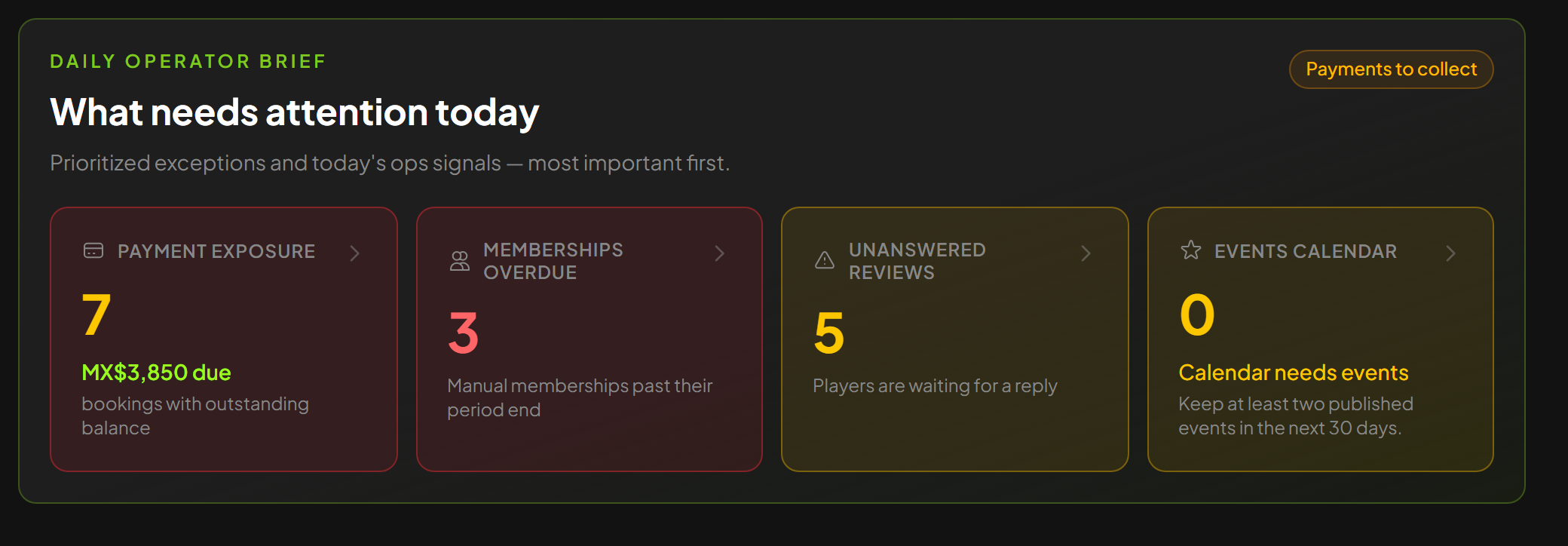
The desk needs to know which bookings still have a balance and who is following up. Notes in private messages and bank screenshots make the next shift repeat the same work.
Match payments to reservations as they arrive. Review disputed transfers separately rather than leaving every uncertain balance on the main list.
Respond to repeated patterns
One late payment may be an oversight. Repeated unpaid peak bookings call for a different rule, such as payment at booking or no further holds until the balance is cleared.
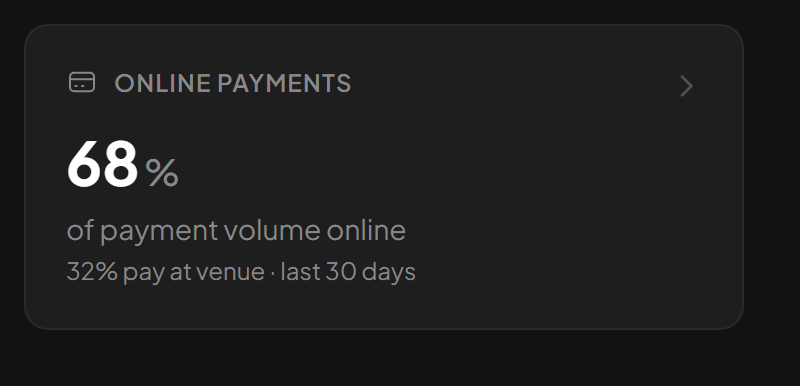
Online payment can reduce the chase, but it is not the policy by itself. Walk-ins and trusted arrangements may still pay at the venue. What matters is that staff know when a court is truly committed and when it should return to sale.
Smash can show outstanding booking balances and accept optional online payment, with normal card-processing fees applying. Whatever system you use, review unpaid courts before the busy period begins.
The aim is not to remove every flexible payment arrangement. It is to avoid reaching match time with a reserved court and no clear agreement about payment.
Keep exploring
Related articles