Notice When Regular Players Stop Coming
A busy calendar can hide familiar players who have quietly stopped coming. Learn how to spot a broken routine, ask what changed, and follow up without sending a generic discount.
· · 2 min read
Courts can stay busy while familiar players quietly disappear. A full evening tells you that the slot is popular. It does not tell you whether the people who helped build the club are still coming.
The useful question is not simply whether bookings are up or down. It is whether the same people return, who has broken a regular habit, and whether there is a reason worth addressing.
Define what regular means at your club
A regular might play twice a week, once every Thursday, or only during a seasonal league. Set a definition that matches the club rather than copying a universal threshold.
Look for a change from that person's own pattern. Someone who played every week and has missed a month deserves attention. Someone who visits every school holiday does not become a lost player because they were absent in November.
Separate a quiet player from a quiet week
Weather, holidays, injuries, and travel can interrupt a routine. Do not treat one missed booking as a retention crisis.
Review several weeks and compare names, not only totals. If Thursday remains full but six familiar players have been replaced by first-time visitors, the club has gained demand and lost part of its community at the same time.
Ask before you offer
Start with a short personal message from someone the player knows. Ask how they are and whether anything made it harder to return. Do not lead with a discount.
The answer may be a changed work schedule, an unsuitable level, an unresolved complaint, or simply a group that stopped organizing. Each cause needs a different response. A daytime invitation will not fix a poor experience, and a coupon will not rebuild a broken four.
Give the follow-up one owner
Keep the list short enough to use. Assign a few names each week, note the response, and avoid having three staff members send the same message.
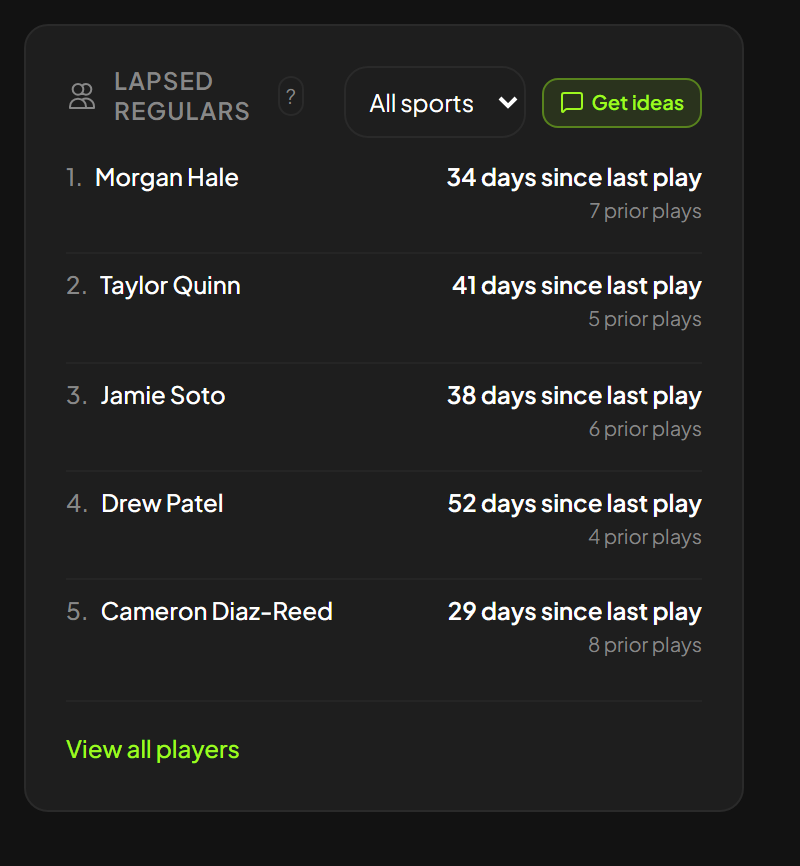
Smash can surface players whose usual attendance has gone quiet, but the conversation still belongs to the club. Use any report as a prompt to notice people, not as permission to automate a relationship.
The goal is not to chase every absent player. It is to notice a meaningful change early, ask a human question, and act on the answer when the club can genuinely help.
Keep exploring
Related articles